 Paikkatietohakemisto

Type of resources
Available actions
Topics
Keywords
Contact for the resource
Provided by
Years
Formats
Representation types
Update frequencies
status
Service types
Scale
Resolution
-
NLS-FI INSPIRE View Service for Cadastral Parcels Theme is an INSPIRE compliant Web Map Service. It contains the following harmonized INSPIRE map layers: CadastralParcel, CadastralBoundary. The service is based on the NLS-FI INSPIRE Cadastral Parcels dataset. The dataset is administrated by the National Land Survey of Finland.
-
NLS-FI INSPIRE View Service for Geographical Names Theme is an INSPIRE compliant Web Map Service. It contains the following harmonized INSPIRE map layers: NamedPlace. The service is based on the Geographic Names Register of the National Land Survey of Finland. The dataset is administrated by the National Land Survey of Finland.
-
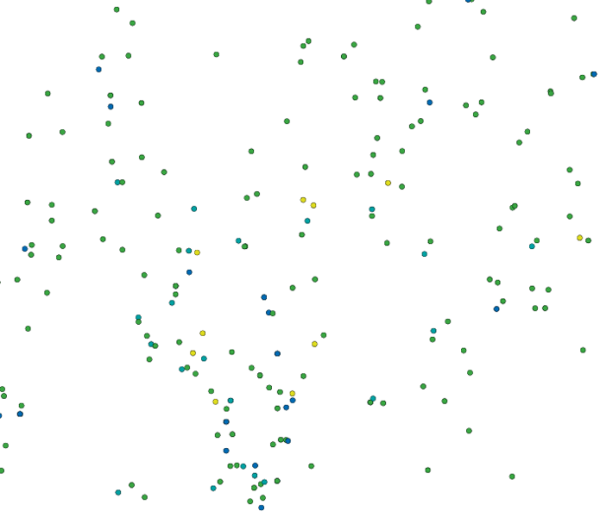
Location (x,y) and name of educational institutions. Statistical reference year 2022. Data includes a location and a name of every comprehensive and upper secondary level schools in Finland. The source of data is the yearly updated register of educational institutions (https://tilastokeskus.fi/tup/oppilaitosrekisteri/index_en.html) which is maintained by Statistics Finland. An educational institution is defined as an administrative unit as such not the school building or the operating place. Coordinates are mostly accurate based on the centroid of the building althought there exists some educational institutions with estimated coordinates. Estimations are based to the street address of the educational institutions. Validity (OLO): 0 = Valid 1 = Closed down during the statistical year 2 = Merged with another educational institution during the statistical year 3 = Educational institution removed from the educational institutions of the education system 6 = Educational institution had no activity during the statistical year 7 = Technical removal Type of educational institute (OLTYP): 11 = Comprehensive schools 12 = Comprehensive school level special education schools 15 = Upper secondary general schools 19 = Comprehensive and upper secondary level schools The general Terms of Use must be observed when using the data: http://tilastokeskus.fi/org/lainsaadanto/copyright_en.html. In addition to the national version, an INSPIRE information product is also available from the data.
-

Paikkatietohakemisto is a national metadata discovery service.
-

The Geological Survey of Finland (GTK) has carried out systematic aerogeophysical low-altitude surveys during the period 1972-2007. The flight altitude (main terrain clearance) has been 30-40 m with a nominal flight line spacing of 200 m. The standard flight lines chosen run North-South and East-West and follow the main geological trends. The distance between the measuring points along the survey lines has been 6-50 m. The geophysical parameters measured include Earth's magnetic field, the electromagnetic field and natural gamma radiation. Magnetic measurements determine the Earth's magnetic field strength (magnetic flux density), and the parameter obtained is the total magnetic intensity. The measurements have been made with one to three proton magnetometers until 1991 and thereafter with one or two cesium magnetometers. Most of the land area has been flown using two magnetometers.
-
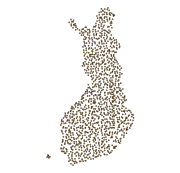
The Regional Stream Sediment Geochemical Mapping data set gives information on the elemental concentrations in organic sediments of small headwater streams. The samples have been taken from small headwater streams (catchment area under 30 km2) in the late summer of 1990. Sampling has been repeated for about every fourth point during the years 1995, 2000 and 2006. The number of samples was 1162 in 1990 (at a density of one sample / 300 km2), 286 in 1995, 286 in 2000 and 249 in 2006. The data set covers the whole of Finland. Stream water samples have also been taken at the same time. Sampling, processing and analysis methods have been described in the Geochemical Atlas of Finland, Part 3, p. 27 - 30 (Lahermo et. al 1996). Field observations, coordinates and element concentrations determined from samples have been made into a database, in which each record represents one sample point. The data for each sampling year have been recorded on different tables. The method of analysis is referred to with a four-character method code. The codes are as follows: 503H = mercury determination using the cold vapour method 503P = nitric acid extraction in a microwave oven, measurement with ICP-AES 503M = nitric acid extraction in a microwave oven, measurement with ICP-MS 820L = carbon, hydrogen and nitrogen determination with a LECO analyser. The element concentration data include a numerical concentration value (as mg kg-1 or ppm) and possibly a check mark. The concentration is recorded as a variable, which has a name that comprises the chemical symbol for the element and the code for the method of analysis. For example AS_503M is arsenic (As) concentration, which is determined with the ICP-MS method (503M). The next variable has a check mark, for example AS_503MT. If the numerical value following the check mark is ‘>’ or '‘<’ then the number recorded in the concentration field is the determination limit of the chemical analytical method used and the actual concentration is less than this value. If the check mark is an exclamation mark (!), the analytical result is smaller than the determination limit of the analytical method use but the (unreliable) value obtained with the measuring instrument has been entered in the database. There is no data are if the check mark is a 'x'. The original purpose of the Regional Stream Water Geochemical Mapping data set was national general geochemical mapping and the basic assessment of environmental state. Other uses are, for example, the assessment of changes in environmental state and determination of the baseline concentrations of surface water as part of the evaluation of the chemical state of catchment areas in accordance with the Water Framework Directive of the EU. The original purpose of the Regional Stream Water Geochemical Mapping data set was national general geochemical mapping and the basic assessment of environmental state. Other uses are, for example, the assessment of changes in environmental state and determination of the baseline concentrations of surface water as part of the evaluation of the chemical state of catchment areas in accordance with the Water Framework Directive of the EU.
-
Statistics Finland's Web Service is a WFS interface service through which the following data required by INSPIRE and national legislation on geographic information are available: 1) Statistical units: Regional divisions (municipality, major region, region, sub-regional unit, Regional State Administrative Agency (AVI), Centre for Economic Development, Transport and the Environment (ELY), electoral district) and grid 1 km x 1 km 2) Non-profit and public services: Educational institutions (comprehensive schools, upper secondary general schools) 3) Production and industrial facilities: Production and industrial facilities 4) Population distribution by the regional divisions used in statistics and by 1 km x 1 km grids. Other data published: - Population distribution by 5 km x 5 km grids - Open data by postal code area (Paavo) The data are administered by Statistics Finland. The service is free of charge and does not require authentication or identification with a user ID and password. The general Terms of Use must be observed when using the data: http://tilastokeskus.fi/org/lainsaadanto/copyright_en.html.
-
Please note that this dataset is deprecated from 30 May 2025 onwards. For more information, please check https://www.maanmittauslaitos.fi/en/service-messages/changes-inspire-services-concerning-buildings-and-addresses DVV INSPIRE Addresses Theme Dataset is a dataset depicting the Addresses of Buildings in Finland. It contains the following INSPIRE feature types: Address, AdminUnitName, PostalDescriptor, ThoroughfareName. The elements are updated weekly. The dataset is based on "Väestötietojärjestelmän rakennus- ja huoneistotiedot" by the Digital and Population Data Services Agency (Digi- ja väestötietovirasto). The dataset is available via the DVV INSPIRE Download Service (WFS) for Addresses Theme and it can be viewed via the DVV INSPIRE View Service (WMS) for Addresses.
-
NLS-FI INSPIRE View Service for Hydrography Theme is an INSPIRE compliant Web Map Service. It contains the following harmonized INSPIRE map layers: Land-water Boundary, Waterbodies, Man-made Objects, Hydro Point of Interest. The service is based on the NLS-FI INSPIRE Hydrography Physical Waters dataset. The dataset is administrated by the National Land Survey of Finland.
-
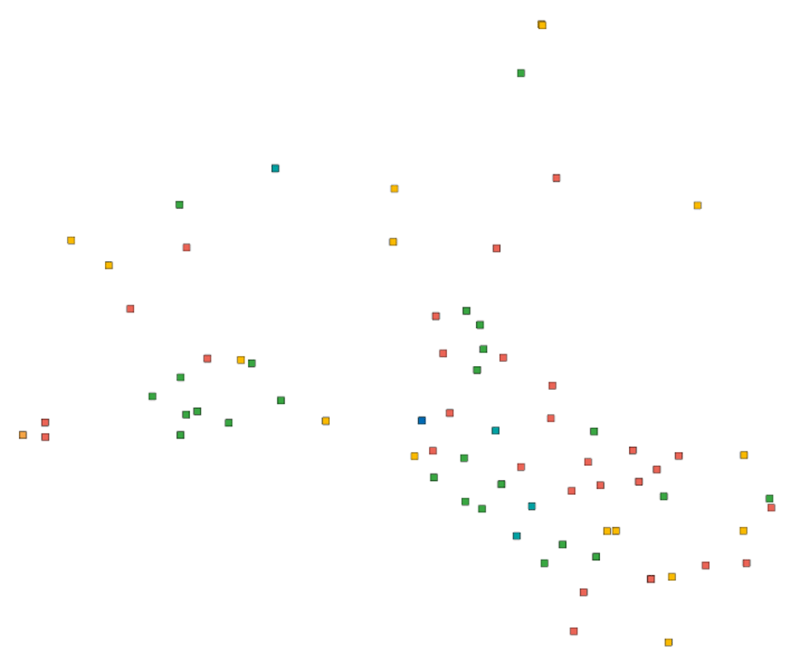
Production and Industrial Facilities contain the data set on establishments based on Statistics Finland's Business Register as follows: Data: location coordinates of the establishment, industry according to the Standard Industrial Classification TOL 2008 at the 2-digit level Industries according to D2.8.III.8 INSPIRE in TOL 2008 industries: B Mining and quarrying C Manufacturing D Electricity, gas steam and air conditioning supply E Water supply, sewerage, waste management and remediation activities F Construction H Transport and storage (excl. 53 Postal and courier activities) Coverage of the data set: establishments with over ten employees Statistical reference year: 2019 The data set is also suitable for viewing the location of industrial establishments. The coverage of the spatial data is about 90 % of the statistical data. The general Terms of Use must be observed when using the data: http://tilastokeskus.fi/org/lainsaadanto/copyright_en.html. In addition to the national version, an INSPIRE information product is also available from the data.